Your dental practice’s brand is working on your behalf every single day – whether you’ve intentionally built it or not. Every time a potential patient lands on your website, sees your logo on a referral card, or reads one of your brochures, they’re forming an impression. The question is whether that impression is one you’ve shaped with intention. A clear, consistent dental practice branding strategy is one of the most valuable investments you can make as a practice owner – not because it looks nice, but because it directly influences whether patients choose you, trust you, and come back.
This guide covers what dental branding actually means, why it matters for growth, what a complete brand identity includes, and how to build one that reflects the care you actually deliver.
What Dental Practice Branding Really Means
Branding is not your logo. Your logo is part of your brand – an important part – but branding is the fuller picture of how your practice is perceived by every patient who encounters it.
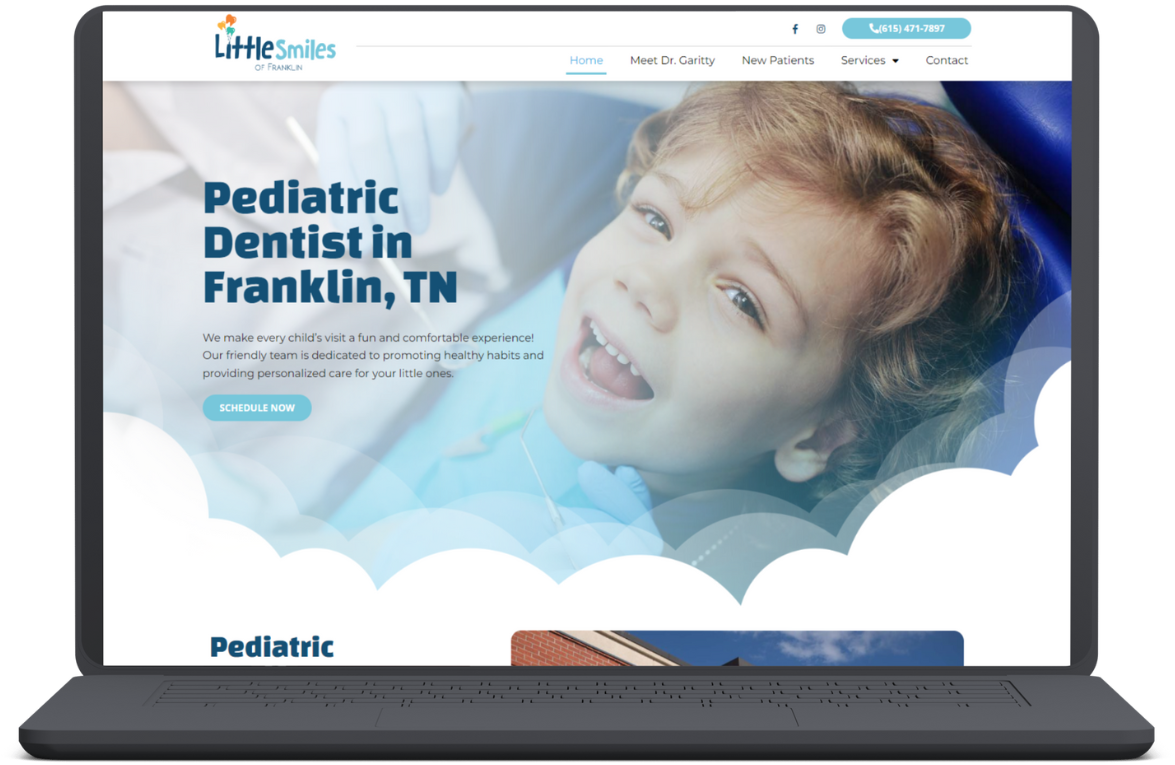
Your brand communicates whether your practice feels modern or traditional, warm or clinical, family-focused or precision-oriented. It shapes how patients feel before they ever sit in the chair. A pediatric dental office with bright colors, playful typography, and an approachable tone will attract very different patients than a cosmetic dentistry practice with a sleek, minimalist aesthetic. Neither approach is wrong. What matters is whether your brand accurately reflects your practice and resonates with the patients you most want to serve.
Think of it this way: your clinical care is what happens inside the operatory. Your brand is what earns a patient the confidence to walk through the door in the first place.
The Business Case for a Strong Dental Branding Strategy
Practice owners sometimes treat branding as optional – something to revisit “when there’s time.” The data suggests that’s a costly position to hold.
Consistent brand presentation can increase revenue by as much as 23%, and more than half of businesses say brand consistency substantially contributes to business growth. For a dental practice, that consistency plays out across your website, your signage, your patient communications, your social media, and your office environment. When all of those touchpoints align, they reinforce one another. When they don’t, patients notice – even if they can’t articulate why.
The patient decision process has also shifted considerably. According to a 2025 RepuGen survey of over 1,200 patients, 73.28% rely on online reviews when choosing a provider, and 70% require a minimum 4-star rating before considering a practice. That means your digital presence – which includes how professionally branded your website and profiles appear – is a deciding factor before a patient ever calls.
A separate survey found that 84% of patients check online reviews prior to selecting a new provider, with 40% having changed or canceled appointments based on what they found. When your brand is inconsistent or underdeveloped, it creates doubt. When it’s cohesive and professional, it quietly builds the confidence patients need to move forward.
If you’re investing in healthcare SEO or Google Ads to drive new patient traffic, your brand is the landing page for all of it. Traffic without a compelling, trustworthy brand to convert it is a missed opportunity.
The Core Elements of a Complete Dental Brand Identity
A dental branding strategy that drives real results isn’t a single asset – it’s a system of interconnected elements that work together to create a unified, recognizable presence. Here’s what a complete dental brand identity includes:
Logo Design
Your logo is the most immediate expression of your brand. It appears everywhere: your website, signage, business cards, uniforms, invoices, and social media. A memorable logo can increase brand recognition by up to 80%. For dental practices, where patients may be evaluating several options simultaneously, that recognition matters. A well-designed logo isn’t just aesthetically pleasing – it’s a signal of professionalism and stability that patients unconsciously associate with quality care.
Brand Book / Style Guide
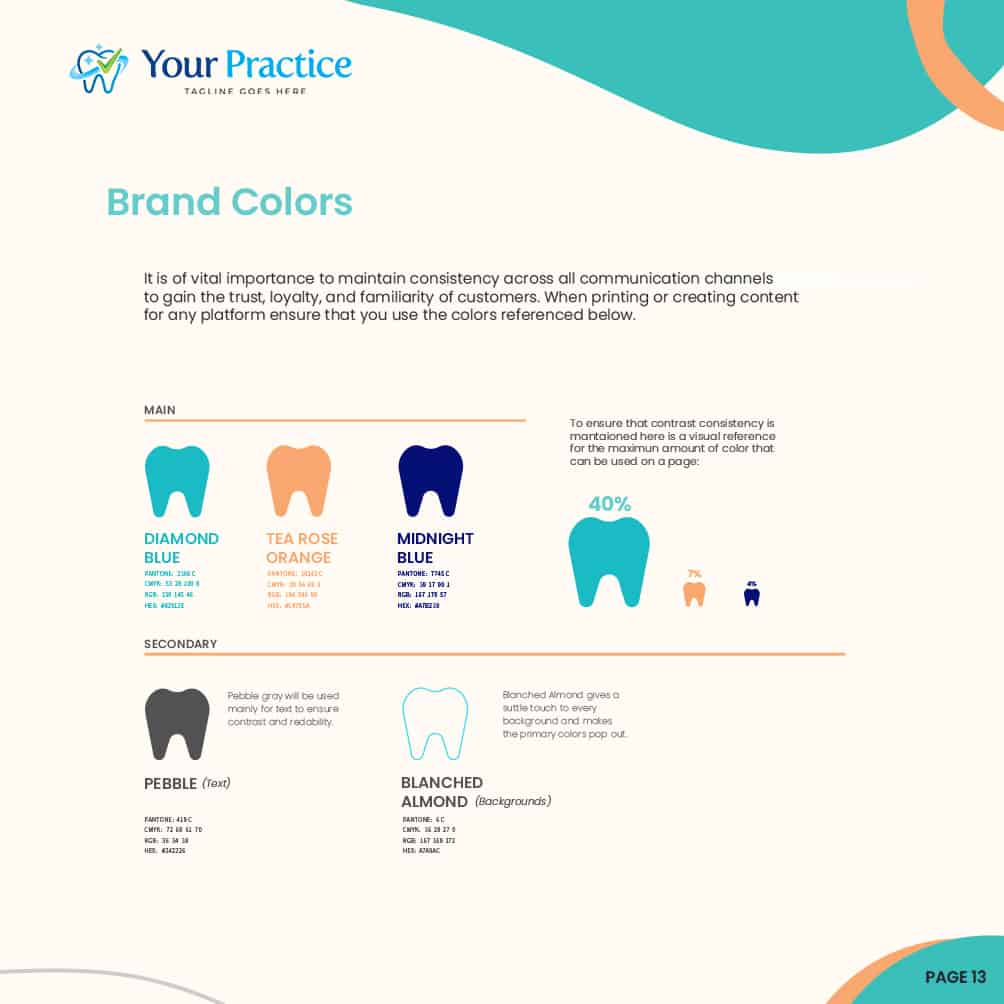
A brand book is the document that keeps your brand consistent across every application, every team member, and every vendor. It defines your color palette, typography, logo usage rules, image style, and tone of voice. Without it, even well-intentioned communications can drift from your brand standards over time. A detailed brand style guide ensures that your front desk coordinator, your social media manager, and your web developer are all working from the same playbook.
Business Cards
A professionally designed business card that aligns with your practice’s branding does more than share contact information – it reinforces the impression your practice is trying to make. Generic or off-brand cards blend in and get forgotten. A card that’s thoughtfully designed within your brand system extends that professional experience beyond the office.
Brochures and Flyers
Printed collateral still earns its place in dental practices. A well-crafted brochure handed directly to a patient creates a more personal connection than a mass email. It demonstrates care and professionalism, and it gives patients something tangible to reference when sharing your practice with friends or family. When your brochures align with the same visual identity as your website and signage, the effect compounds.
Letterheads and Envelopes
Every piece of formal communication your practice sends carries a branding opportunity. Customized letterheads and envelopes reinforce your visual identity and convey a level of attention to detail that reflects well on your clinical standards. In some cases, a branded letter is a patient’s first contact with your practice – and 94% of first impressions are design-related.
Why Brand Consistency Matters More Than You Think
One of the most common branding mistakes dental practices make is treating each channel in isolation. The website was designed three years ago. The business cards were done by a different vendor. The social media graphics were put together in-house. The result is a fragmented experience that patients register, even when they can’t identify exactly what feels off.
Brand consistency is the practice of ensuring that every touchpoint – digital and physical – reflects the same identity, voice, and visual standards. It’s what makes a brand feel trustworthy rather than uncertain.
In our experience working with dental and healthcare practices, the issue isn’t usually that practices have a bad brand. It’s that they have a fragmented one. A logo that doesn’t translate well to digital, a color palette that was never formally documented, messaging that shifts depending on who wrote the copy that day. These gaps quietly erode the credibility your clinical team works hard to earn.
When your brand is consistent – from your Google Business Profile to the brochure in your waiting room – it signals to patients that your practice is organized, attentive, and trustworthy. Those are the same qualities patients are looking for in a provider.
How to Build a Dental Brand That Attracts the Right Patients
The most effective dental branding strategies begin with a clear understanding of your practice’s identity and your target patient. Before any design work begins, the right questions need to be answered:
- Who is your ideal patient, and what do they value when choosing a dental provider?
- What does your practice do exceptionally well, and how does that differentiate you in your market?
- What feeling do you want patients to have before, during, and after their visit?
- Does your current brand reflect where your practice is today – or where it was five years ago?
These aren’t marketing questions. They’re strategic ones. The answers shape every design decision that follows. A pediatric dental practice built around a family-friendly, approachable experience will need a brand that feels warm, accessible, and welcoming to parents and children alike. A cosmetic-focused practice targeting high-value elective procedures will need a brand that feels premium, polished, and confidence-inspiring.
Building a dental brand for the right audience requires demographic analysis and competitive context. Understanding who your patients are, what other practices they’re considering, and how your current brand compares is the foundation of a strategy that works. Our market feasibility and demographic reports provide exactly that foundation – before a single design decision is made.
If you’re ready to explore what a branded identity could look like for your practice, contact our team to start the conversation.
When It Makes Sense to Rebrand Your Dental Practice
Not every dental practice needs a complete brand overhaul. But there are clear signals that suggest your current brand is holding your growth back rather than supporting it:
- Your logo or visual identity looks dated compared to competing practices in your area
- You’ve expanded your services, added associates, or shifted your practice focus, but your brand hasn’t followed
- Your website, signage, and printed materials don’t look like they belong to the same practice
- You’re opening a new location and need a brand that scales
- New patient volume has plateaued despite consistent marketing activity
A brand refresh doesn’t mean starting from scratch. In many cases, it means modernizing what already exists – tightening the color palette, refreshing the typography, developing a style guide that didn’t previously exist, and bringing everything into alignment. The goal is always a brand that accurately represents what your practice delivers today, not what it looked like when it first opened.
Whether you’re building from the ground up or updating an established identity, a dedicated branding specialist who understands the healthcare space makes a measurable difference. Generic design approaches produce generic results. Dental branding that works is specific to your practice, your patients, and your market.
What to Expect from a Professional Dental Branding Process
For practice owners who haven’t gone through a formal branding process before, it helps to understand what to expect. The process should feel collaborative, not handed down.
A strong branding engagement begins with a discovery and immersion phase – a structured conversation to understand your practice’s values, your target patients, your competitive environment, and your long-term vision. That context informs every design decision that follows. From there, customized design concepts are developed and presented for your feedback, followed by a structured revision process to ensure the final brand identity reflects your vision accurately.
At the end of the process, you should receive more than a logo file. A complete dental branding package includes high-resolution files in multiple formats (EPS, PNG, JPG) suitable for both digital and print use, a brand book documenting all brand standards, and the collateral elements your practice needs to operate consistently. You should also receive expert guidance on how to deploy the brand across your marketing channels so the investment compounds over time.
Our dental marketing services are built to integrate seamlessly with your brand identity – from your website to your paid advertising – so every channel reinforces the same professional, patient-centered experience.
If your current brand no longer reflects the practice you’ve built, now is a reasonable time to address it. Reach out to our team at (866) 847-6898 or use our online contact form to start the process.
Frequently Asked Questions
What is included in a dental practice branding package?
A comprehensive dental branding package typically includes logo design, a brand style guide (brand book), business cards, brochures and flyers, and letterhead and envelope design. It may also include guidance on tone of voice, typography, and color standards that ensure your brand remains consistent across all patient-facing channels.
How long does the dental branding process take?
The timeline varies depending on the scope of the project, but a full branding engagement typically moves through discovery, concept development, and revision stages. Turnaround can range from a few weeks for focused projects to longer for comprehensive brand systems. A quality branding partner will provide a clear timeline upfront and work to deliver results without sacrificing quality.
Do I need to rebrand if I already have a logo?
Not necessarily. If your logo is well-designed and still accurately reflects your practice, a full rebrand may not be required. However, many practices find that a logo exists in isolation – without a supporting brand book, consistent color palette, or defined typography – which leads to fragmented patient-facing materials. A branding audit can identify whether a refresh or a full rebuild is the right approach.
How does dental branding help attract new patients?
A strong, consistent brand builds recognition and trust before a patient ever contacts your practice. When your website, social media, printed materials, and digital ads all reflect the same professional identity, patients perceive your practice as credible and established. Combined with positive online reviews, a cohesive brand significantly increases the likelihood that a prospective patient will choose you over a competitor.
Can I have input during the design process?
Yes – and your input is essential. A well-run branding process is collaborative by design. Your knowledge of your patients, your clinical philosophy, and your long-term vision for the practice is what separates a truly tailored brand from a generic one. Expect structured opportunities to provide feedback throughout concept development and revisions.
What file formats will I receive after branding is complete?
You should receive your final brand assets in high-resolution formats suitable for both digital and print use, including EPS, PNG, and JPG. EPS files are essential for scalable print applications like signage, while PNG and JPG formats serve your website, social media, and digital advertising needs. A comprehensive file delivery ensures your brand looks sharp across every medium, at any size.