

Be The Practice AI Recommends  Learn More

Healthcare Website
Design & Development

Your website is often the first place prospective patients go to understand your practice, compare services, and decide whether to reach out. It should reflect the quality of your care, make important information easy to find, and give visitors a clear next step.

Clear to Launch designs custom healthcare websites around your brand, services, patient journey, and growth goals, with professional copywriting, mobile usability, SEO, and clear paths to contact or request an appointment built in from the start.

Healthcare Websites for Practice Growth

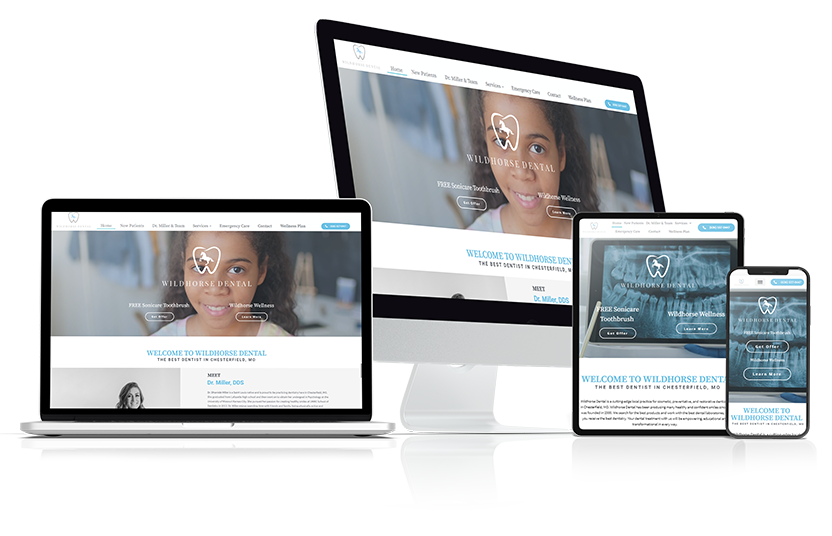
Screenshot of Wildhorse Dental’s responsive website displayed on desktop, laptop, tablet, and mobile devices, highlighting mobile-friendly dental web design

Your Website Shapes the First Impression

Before many prospective patients call, request an appointment, or walk through your doors, they have already spent time on your website. The design, photography, messaging, navigation, and mobile experience all influence how they perceive your practice. A strong site should reflect the quality of the care you provide and make the information patients need easy to find.

Built to Inform, Build Trust, and Make the Next Step Easy

An effective healthcare website should help visitors quickly understand who you are, what you offer, and what to do next. Clear service information, provider details, trust signals, useful patient resources, and well-placed calls to action can make the difference between someone continuing their search and contacting your practice.

Behind the design, the site also needs a strong technical foundation. Mobile usability, accessibility best practices, SEO, site structure, and analytics setup should be considered during the build rather than added as afterthoughts.

8 Common Healthcare Website Problems

  1. Poor Mobile Design: A website that is difficult to read, navigate, or use on a phone can frustrate prospective patients before they ever contact the practice.
  2. Slow or Unreliable Performance: Slow pages, broken links, technical errors, and other performance issues create a poor user experience and can also affect search visibility.
  3. Outdated or Generic Design: Your website should reflect the quality, personality, and current services of your practice. An outdated or overly generic design can make it harder to build trust.
  4. Key Information Is Hard to Find: Patients should be able to quickly find your services, providers, location, contact information, office details, and the next step for requesting an appointment.
  5. Weak SEO Foundations: Poor page structure, metadata, URLs, content organization, or other SEO elements can make it harder for search engines to understand and surface important pages.
  6. Unclear Calls to Action: Visitors should not have to guess what to do next. Calls, appointment requests, online scheduling when available, and other important actions should be easy to find.
  7. Thin or Outdated Content: Website content should accurately explain your current services, providers, and patient information while answering the questions prospective patients are likely to have.
  8. Weak Trust Signals: Provider information, reviews, credentials, professional photography, and other appropriate trust signals help prospective patients feel confident in a practice. When those elements are missing or difficult to find, the website may not reflect the quality of the care behind it.

Outdated & Unoptimized Website

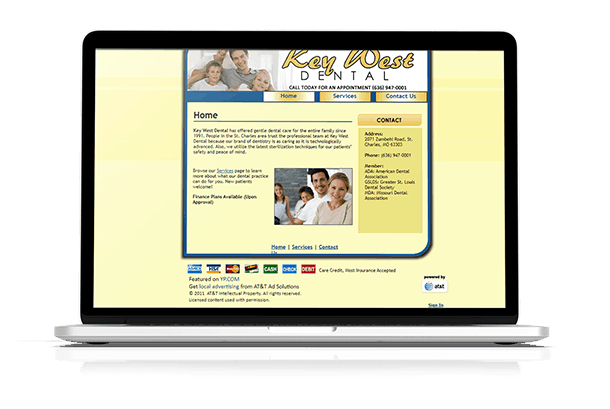
Outdated dental website example for Key West Dental, illustrating an unoptimized and non-responsive design

What’s Included in Your Healthcare Website Project

Every website project is shaped around the practice, its goals, and the technology it needs. While exact scope can vary, our healthcare website projects typically include the following:

Blue checkmark symbol representing successful ad verification or campaign approval.

Custom Healthcare Website Design

Your website is designed around your practice, brand, services, and audience rather than forcing your content into a generic template. Our team works with you to create a professional site that feels consistent with the experience you want patients to have.

Blue checkmark symbol representing successful ad verification or campaign approval.

Mobile-Responsive Development

We build websites to work across phones, tablets, laptops, and desktop screens, with navigation, content, forms, and calls to action designed to remain clear and usable across devices.

Blue checkmark symbol representing successful ad verification or campaign approval.

SEO Foundations Built In

Foundational SEO is built into the website from the start. This includes SEO-conscious page content, metadata, URL structure, image alt text, schema, internal linking, and other on-page and technical elements that help search engines understand the site. Practices that want continued optimization after launch can also add our healthcare SEO services.

Blue checkmark symbol representing successful ad verification or campaign approval.

Patient-Focused Page Structure

Pages are planned around the questions prospective patients have and the actions they may want to take. Clear navigation, useful service information, trust signals, and strategically placed calls to action help visitors move from researching the practice to calling, requesting an appointment, or taking another appropriate next step.

Blue checkmark symbol representing successful ad verification or campaign approval.

Professional Healthcare Copywriting

Our writers create website copy that clearly explains your services, reflects your practice, supports SEO, and gives prospective patients useful information without sounding generic or overly promotional.

Blue checkmark symbol representing successful ad verification or campaign approval.

Analytics & Tracking Setup

We set up Google Analytics 4 and Google Tag Manager so the website has the tracking foundation needed to measure traffic and support future marketing. Your practice can retain access to its analytics property and data.

Blue checkmark symbol representing successful ad verification or campaign approval.

Launch, Hosting & Domain Coordination

We coordinate the technical steps needed to launch your website, including connecting the domain and setting up hosting when hosting is part of the project. Our team works to make the transition from development to the live website as smooth as possible.

Blue checkmark symbol representing successful ad verification or campaign approval.

Accessibility Best Practices

We build with website accessibility best practices in mind, including readable content, logical page structure, mobile usability, image alt text, and other considerations that can make the website easier to use for a wider range of visitors.

Healthcare Website FAQs

What should a healthcare website include?

A healthcare website should make it easy for prospective patients to understand the practice, services, providers, location, and next steps for contacting or requesting an appointment. Strong websites also consider mobile usability, SEO, trust signals, accessibility, and clear navigation from the beginning.

Yes. Our healthcare websites are built to work across mobile phones, tablets, laptops, and desktop screens so patients can navigate the site and access important information regardless of the device they use.

Yes. Foundational on-page SEO is part of our website development process, including SEO-conscious content, metadata, URL structure, image alt text, schema, internal linking, and other technical and on-page elements. Ongoing SEO services such as recurring content development, citation management, backlink work, and continued optimization are available separately based on the needs of the practice.

Yes. Our writers create healthcare website content as part of the project. We work to make the copy accurate, easy for prospective patients to understand, aligned with the practice’s voice, and supportive of both search visibility and conversions.

Can you integrate online appointment booking or other practice tools?

In many cases, yes. We can integrate or link to scheduling systems, forms, and other tools based on what your practice uses and what the platform supports. Any specific functionality can be reviewed during the planning process.

A redesign can affect search visibility if URLs, redirects, content, metadata, or other technical elements are handled incorrectly. Our website process considers these factors during the transition so existing SEO value can be preserved wherever possible.

A typical healthcare website project takes approximately 8 to 12 weeks. The exact timeline can vary based on the size and complexity of the site, required functionality, feedback and approvals, and other project-specific needs.

Website pricing depends on factors such as the number of pages, functionality, design requirements, content needs, and overall project scope. After learning more about your practice and goals, we can provide a proposal based on what the project actually requires.