
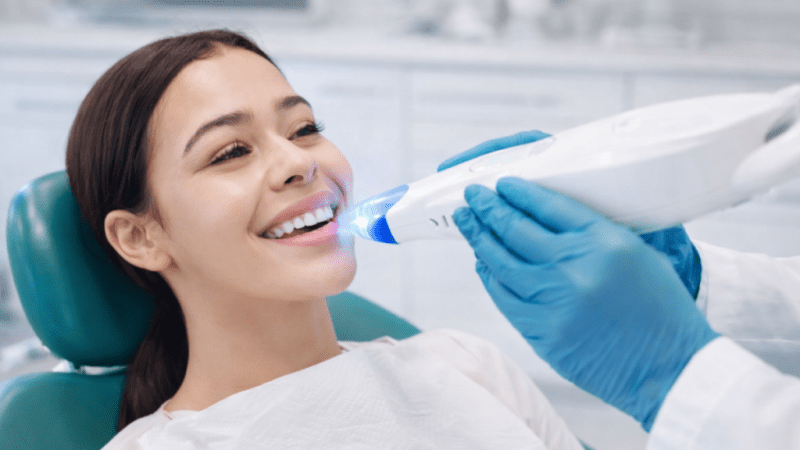
Cosmetic dentistry runs on desire – and meta ads for dental practices are built to reach people in the exact moment that desire forms. Facebook and Instagram are where prospective patients first see a smile transformation that stops them mid-scroll, feel a flicker of “I wonder if I could do that,” and quietly begin the research that eventually leads them to your consultation chair. That moment is the beginning of a decision cycle, and if your practice isn’t present when it happens, you’re not just missing a click. You’re missing the patient entirely.
This guide is written specifically for cosmetic dentists – practices that offer veneers, smile makeovers, clear aligners, whitening, and full-mouth reconstruction. It covers how Meta advertising actually works for your type of practice, which services perform best, how targeting is built, what strong creative looks like on each platform, where most campaigns fall apart, and why healthcare-specific management matters more in dentistry than most practice owners realize.
Why Meta Advertising Is Uniquely Suited to Cosmetic Dentistry
Most dental services solve an active problem. A toothache gets searched. A broken tooth gets searched. Insurance-covered cleanings get searched when someone moves to a new city. Patients come to those services with intent already formed. Cosmetic dentistry is different. The desire for a better smile is rarely urgent. It lives in the background – activated by a photo, a social feed, a life event, or simply a moment of genuine self-reflection. That means traditional search advertising, while still valuable, captures only the patients who have already crossed from passive interest into active search.
Meta advertising reaches patients before they search. It operates at the awareness and consideration stage of the patient journey, where most cosmetic dental cases actually begin. Instagram and Facebook are inherently visual platforms where aesthetic content – beauty, fashion, wellness, personal transformation – performs at the highest level. Before-and-after smile photos don’t just perform well in cosmetic dental ads. They perform exceptionally well because they align with what users on these platforms are already primed to respond to.
More than 3.35 billion people use at least one Meta platform every single day. That figure isn’t a ceiling on your audience – it’s context for how large and how segmentable that audience is. Within it, the people who match your ideal cosmetic patient profile can be reached with a specificity that no billboard, mailer, or radio spot can approach.
The Patient Psychology Behind Cosmetic Dental Decisions and Why It Matters for Ad Strategy
Understanding how cosmetic dental patients make decisions is foundational to building campaigns that actually convert. These patients are not transacting on urgency. They’re making a high-consideration, often emotionally charged decision about their appearance – one that involves meaningful financial commitment, some anxiety about the process, and a deep need to trust the provider before they ever walk through the door.
This psychology shapes everything about how your ads should work.
The path a cosmetic patient typically takes looks something like this: they encounter an aspirational result (your before-and-after photo or patient video), feel a personal connection to it, visit your profile or website to learn more, begin comparing their options, start reading reviews, and eventually reach out – sometimes weeks or months after that first impression. That is not a short journey, and it is not a journey that a single ad will complete.
Effective Meta campaigns for cosmetic practices are built around this reality. Rather than optimizing solely for immediate click-to-call conversions, they layer awareness campaigns that introduce your practice and work, consideration campaigns that showcase expertise and social proof, and conversion campaigns that are aimed at patients who have already shown interest but haven’t yet made contact. Each layer serves a different patient at a different point in their decision process.
In our experience working with dental practices across specialties, the ones that see consistent, compounding results from Meta advertising are those that treat the platform as a patient relationship channel – not simply a lead generation switch.
The Cosmetic Services That Respond Best to Meta Advertising
Not all dental services perform equally in social advertising. Cosmetic procedures have a structural advantage because results are visible, immediately understood, and aspirational. The services that generate the strongest engagement and qualified inquiry volume through Meta campaigns include:
Veneers and porcelain smile makeovers are the clearest fit for the platform. The transformation is dramatic, visual, and emotionally resonant. A patient who looks self-conscious in a before photo and radiant in the after creates a narrative that prospective patients apply to themselves – which is exactly the psychological mechanism that drives cosmetic dental inquiries. According to the American Academy of Cosmetic Dentistry, the vast majority of adults believe that an attractive smile carries meaningful personal and social benefits – a belief that your ad creative doesn’t need to create, only activate.
Teeth whitening works as a high-volume entry service. The price point lowers the barrier to a first appointment, and a positive first experience opens the door to more comprehensive cosmetic treatment conversations. Whitening promotions work especially well for new patient acquisition when paired with a strong new patient offer and a fast follow-up process.
Clear aligners and Invisalign perform strongly among adults aged 25 to 45 who use Instagram heavily and who rejected traditional orthodontics as adolescents because of how braces looked. The before-during-after narrative – showing progression from misaligned teeth through treatment to the finished result – translates well to short-form video content on both platforms.
Dental implants justify a higher cost-per-lead from Meta because the case value is substantial. Targeting can be configured to reach adults in age ranges statistically more likely to have experienced tooth loss, and creative that directly addresses the most common hesitations – cost, timeline, whether it hurts – converts better than straightforward promotional messaging for this service.
Full-mouth reconstruction and smile design are longer-consideration cases that benefit from extended brand exposure. Patients investing at this level want to be highly confident in your competence and your team before they ever call. Campaigns running educational content, provider expertise signals, and patient testimonials over several weeks are better positioned to convert these cases than a single direct-response ad.
How Targeting Works in Meta Ads for Dental Practices and How to Use It Precisely
The targeting infrastructure available in Meta’s advertising platform is one of its most significant advantages over traditional local marketing – and one of the most misunderstood by practice owners who’ve attempted to run campaigns independently.
Geographic targeting for cosmetic dental should reflect the actual draw radius your practice can realistically serve. Cosmetic patients will often travel 20 to 30 miles for a practice they trust and a result they want. In dense metro markets, this might mean a more precise zip-code cluster strategy targeting neighborhoods where your ideal patient demographics are concentrated. In suburban or rural markets, a broader radius with tight demographic filters is usually more effective.
Demographic and life-event targeting is particularly powerful for cosmetic dentistry. Meta’s platform allows advertisers to reach users who have recently announced an engagement, had a milestone birthday, started a new job, or are planning a wedding. These events correlate directly with heightened interest in appearance-related services. A newly engaged 32-year-old browsing Instagram is in a fundamentally different frame of mind than a passive user with no pending life change – and your campaign can reach one without reaching the other.
Interest and behavior targeting expands your reach to users who have demonstrated consistent interest in cosmetic procedures, beauty, personal wellness, self-improvement, and appearance-related content. These audiences typically outperform broad demographic targeting for elective services because they represent people who are already in the right mindset – they just haven’t found your practice yet.
Lookalike audiences take your existing patient data and allow Meta’s algorithm to identify users whose behavioral profile matches your best current patients. This is one of the more sophisticated targeting tools available, and it consistently outperforms cold interest-based targeting once a practice has sufficient source data to build from. A lookalike audience built from a list of your cosmetic case patients tends to outperform one built from your general patient list.
Retargeting campaigns are the highest-leverage tool in a well-built Meta account for cosmetic dentistry. When a prospective patient visits your veneers page, watches more than 50% of a patient testimonial video, or engages with one of your Instagram posts and then doesn’t convert, that behavioral signal is the most valuable data your campaign will generate. Retargeting serves those individuals specific follow-up ads that acknowledge their prior engagement – different messaging, different creative, typically a more direct call to action. Practices running structured retargeting campaigns alongside prospecting campaigns consistently reduce their effective cost-per-consultation compared to those running cold-audience campaigns alone.
What High-Performing Cosmetic Dental Ads Actually Look Like on Facebook and Instagram
Creative quality is not negotiable in cosmetic dental advertising. Patients evaluate your visual judgment before they evaluate anything else. If your ad creative doesn’t reflect the aesthetic standard your practice delivers, the gap communicates itself immediately – and no headline or offer will recover the trust you’ve already lost in that first impression.
Before-and-after photography remains the most consistently high-performing creative format for cosmetic dental services. These images need to be professionally shot, consistently lit, and framed at a matching angle. Smartphone photos with inconsistent backgrounds and lighting carry an implicit message about quality that works against exactly what you’re trying to convey. Building a content library of clinical photography isn’t optional – it’s the primary creative asset your Meta campaigns will draw from. Pairing this with a video and photo marketing strategy ensures you’re never running campaigns on stale creative.
Platform behavior differs meaningfully between Facebook and Instagram, and creative should account for it. Instagram users are visually sophisticated and have high creative expectations – polished imagery and short-form video perform at their best here. Facebook’s user base skews slightly older and tends to engage more with longer-form copy and educational content. Veneers and smile makeover campaigns often perform better on Instagram. Dental implant campaigns that address patient concerns in more detail often see stronger response rates on Facebook. Running identical creative across both platforms without this distinction leaves performance on the table.
Patient video testimonials are the single most trust-building format available in cosmetic dental social advertising. They don’t need to be cinematic productions. A genuine patient speaking for 45 to 60 seconds about how they felt before treatment, what the process was like, and how they feel now carries more persuasive weight than any professionally scripted ad. The key factors are authentic delivery, good natural lighting, and a clear audio track. Pair these with service-specific calls to action to generate the highest conversion rates from video ad placements.
Ad copy should be brief, benefit-forward, and service-specific. State the outcome the patient gains. Name the treatment. Give a clear next step. For consultation-driven campaigns, copy that acknowledges the patient’s hesitation and then dissolves it – “Not sure if veneers are right for you? Here’s what to expect in a first consultation” – consistently outperforms purely promotional messaging.
Landing pages are conversion infrastructure, not an afterthought. When a patient clicks an ad for Invisalign, they should arrive on a page about Invisalign with a clear consultation request form, before-and-after results, and a trust signal like patient reviews or a provider bio – not a general dental homepage. The alignment between what the ad promises and what the landing page delivers is one of the most significant conversion rate variables in the entire funnel.
Compliance Considerations for Healthcare Meta Advertising
This is an area where cosmetic dental practices frequently run into avoidable problems when managing campaigns without healthcare-specific expertise.
Meta’s advertising policies restrict how health-related before-and-after imagery can be used, what claims can be made about treatment outcomes, and how certain audience targeting parameters can be applied to healthcare advertisers. Before-and-after creative that implies a physical transformation tied to body image is subject to policy review and can result in ad disapproval or account restrictions if not configured correctly.
HIPAA compliance is a separate and serious consideration for any dental practice running lead capture campaigns through Meta’s native lead forms. Patient data collected through Meta’s platform – names, phone numbers, email addresses – must be handled in a manner consistent with HIPAA requirements, which affects how lead form data is stored, accessed, and transferred to your practice management system. Generic marketing automation workflows built for non-healthcare businesses are frequently not configured to meet these requirements.
According to the U.S. Department of Health and Human Services Office for Civil Rights, patient information is subject to HIPAA protections from the point of collection – meaning the responsibility doesn’t begin when data enters your practice management software. It begins at the moment a prospective patient provides their information in response to your marketing. This is not a technicality to navigate around. It’s a legitimate compliance obligation that healthcare-specific ad management addresses directly.
Measuring What Actually Matters in Your Meta Ad Campaigns
Most dental practices that run Meta campaigns on their own evaluate performance using platform-native metrics: impressions, clicks, cost-per-click, and click-through rate. These numbers have value as diagnostic indicators, but none of them tell you how many patients walked through your door as a result of your ad spend.
The metrics that actually matter for a cosmetic dental practice are patient acquisition cost, consultation-to-case conversion rate, and average case value from Meta-sourced leads. Tracking these requires proper conversion setup – connecting your Meta ad campaigns to a call tracking system, a form submission tracker, and ideally your practice management software – so that the path from ad impression to booked appointment is measurable.
Without this attribution infrastructure, you’re optimizing for platform performance rather than practice growth. A campaign with a low cost-per-click but a high bounce rate on its landing page is not a successful campaign. A campaign with a higher cost-per-click that generates 12 qualified consultation requests per month at an average case value of $4,000 is performing extremely well, regardless of what the CPM looks like in the platform dashboard.
Our analytics approach connects marketing performance to real practice outcomes – because the number that matters at the end of every month is new patients, not ad impressions.
Integrating Meta Ads Into Your Broader Dental Marketing Strategy
Meta ads for dental practices work best as part of an integrated strategy rather than a standalone channel. The practices that generate the most consistent and compounding growth from social advertising are those that have built intentional alignment across their marketing channels.
Healthcare SEO builds the organic foundation that Meta advertising amplifies. When a prospective patient sees your Instagram ad and then searches your name, they should land on a credible, conversion-ready website with strong reviews and a clear patient experience story. That combination converts at a meaningfully higher rate than a good ad pointing to a weak digital presence. According to the Pew Research Center, approximately 72% of U.S. adults use social media, with usage highest among the 18-to-49 age group most likely to pursue elective cosmetic dental treatment. These patients are moving between platforms constantly during their decision process – which means every channel they encounter your practice on either adds to or subtracts from the trust being built.
Dental marketing at the practice level is never a single-channel game. Google Ads captures patients who are already searching. Meta ads reach those patients before they search. SEO keeps your practice visible in both. Together, these channels cover more of the patient decision journey than any of them do alone.
If your Meta campaigns aren’t generating the consistent inquiry volume your cosmetic practice deserves – or you haven’t yet launched because the setup seems complicated – the issue is almost always structural. Generic targeting, creative that doesn’t reflect your clinical quality, landing pages that aren’t built to convert, and campaigns that aren’t being actively managed are the most common reasons practices write off Meta advertising before giving it a real opportunity.
Our Facebook and Instagram advertising service for healthcare practices is built around what actually drives patient consultations – not just in-platform metrics. If you’re ready to see what a properly managed Meta ad campaign can do for your cosmetic practice, reach out through our contact form or call us at (866) 847-6898. We’re glad to start with a straightforward conversation about whether this is the right channel for where your practice is right now.
Frequently Asked Questions
How much should a cosmetic dental practice budget for Meta ads?
Most cosmetic dental practices starting out with Facebook and Instagram advertising see meaningful results with a monthly ad spend between $1,500 and $3,000, depending on market size, competition, and which services are being promoted. High-value services like full-mouth reconstruction or implants can justify a larger budget because a single converted case significantly outweighs the campaign cost. Ad spend is separate from management fees, and both should be accounted for in your planning from the start.
Can Meta ads generate booked consultations, or just general website traffic?
When campaigns are structured correctly – with specific service targeting, a strong call to action, and a dedicated landing page – Meta ads can and do drive direct consultation requests through lead forms, contact form submissions, and inbound phone calls. The quality of your follow-up process is equally important. Patients who inquire through social advertising typically respond best when they hear back within the same business day.
Are before-and-after photos allowed in Meta dental ads?
Before-and-after imagery can be used in cosmetic dental advertising, but Meta’s platform policies around health-related transformation content require careful review. Ads that imply a physical transformation tied to body image are subject to specific restrictions and can be disapproved without proper setup. This is one of several reasons cosmetic dental practices benefit from working with an agency that has hands-on experience navigating Meta’s healthcare advertising policies.
How long does it take to see results from a Meta ad campaign for a dental practice?
Most practices see initial inquiry activity within the first two to three weeks of a campaign going live. However, reliable performance data – enough to meaningfully optimize targeting and creative – typically requires four to eight weeks. The first month functions largely as a learning and calibration phase. Practices that commit to a minimum of 90 days give their campaigns the time needed to move from initial results to consistent, optimized performance.
Do I need separate campaigns for different cosmetic services, or can I run one general ad?
Separate, service-specific campaigns consistently outperform general dental practice ads for cosmetic services. A patient interested in veneers and a patient interested in Invisalign have different visual triggers, different motivations, and different objections. Campaigns built around a single service allow you to tailor creative, copy, and landing page content to match what that specific patient is looking for – which drives higher click-through rates, better landing page engagement, and more qualified inquiries.
What happens to patient data collected through Meta lead forms – is it HIPAA compliant?
Patient data collected through Meta’s native lead forms requires careful HIPAA-compliant handling from the point of collection. Generic CRM integrations used by non-healthcare businesses are frequently not configured to meet these requirements. When setting up lead generation campaigns for dental practices, proper data handling protocols – including secure transfer, access controls, and appropriate retention policies – need to be part of the campaign architecture from the beginning, not added as an afterthought.


