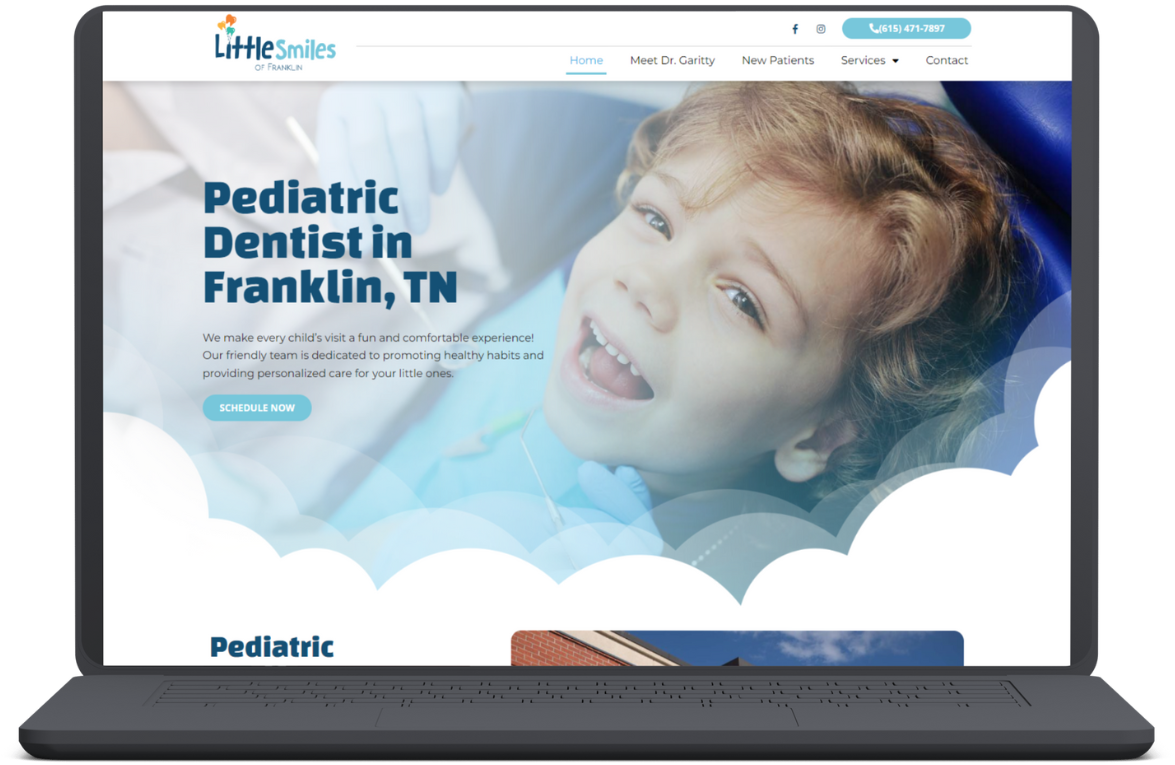

A DSO can add five practices in a year and suddenly find itself managing multiple websites, analytics setups, review systems, Google Business Profiles, advertising accounts, legacy vendors, and reporting structures that were never designed to work together. What felt manageable with two or three locations can quickly become difficult to control once acquisitions accelerate.
That is why dental service organization marketing cannot simply be the strategy for one dental practice repeated across more locations. Every new practice introduces new variables, including different competitors, services, providers, patient demographics, brand histories, appointment capacity, and growth priorities. One office may need more hygiene patients while another needs implant consultations, fuller associate schedules, or greater visibility in a newly entered market.
The challenge is to create enough centralized structure to improve control, efficiency, reporting, and execution without stripping individual practices of the local relevance they need to attract patients. For groups focused specifically on local search across multiple offices, our guide to multi-location dental marketing goes deeper into local visibility. DSO marketing requires a broader operating system behind those location-level efforts.
What Should a DSO Centralize, and What Should Stay Local?
The strongest DSO marketing structures do not choose between centralized and localized marketing. They define which responsibilities belong at each level.
Functions that depend on consistency typically benefit from central oversight. Brand standards, analytics configuration, reporting definitions, account ownership, website governance, campaign naming, review processes, vendor management, compliance standards, and content approval all become harder to manage when every office develops its own process.
Patient acquisition, however, still happens in local markets. A pediatric dental office in one community may face completely different competition from a general practice 40 miles away. One office may have room for more implant cases while another is trying to fill hygiene schedules or support recently added providers. The organization can standardize how marketing is managed without requiring every location to receive identical marketing.
We often see the consequences when this distinction is not defined early. One location uses a different call-tracking system, another counts every phone call as a lead, a third relies on a legacy agency for paid media, and a fourth has incomplete conversion tracking. When leadership eventually asks which practices are performing best, there is no reliable apples-to-apples comparison.
Centralize the infrastructure. Localize the strategy where market conditions require it.
Create Brand Governance Without Erasing Local Equity
DSOs use a range of branding models. Some operate under one consumer-facing brand, others retain acquired practice names, and many use a combination of both approaches. Whatever model the organization chooses, brand decisions should account for the equity that already exists.
An acquired practice may have years of community recognition, Google reviews, referral relationships, branded searches, signage, and patient loyalty tied to its existing name. Replacing that identity immediately after an acquisition can affect far more than a logo.
Before changing an established practice brand, leadership should understand what is already working and decide whether the best approach is a full rebrand, gradual transition, endorsement model, or continued operation under the local name. Teams also need clear standards for how brands are represented across websites, listings, social media, advertising, signage, and patient communications.
Consistency does not mean making every practice identical. It means making intentional decisions instead of allowing each location to evolve independently.
Treat Location-Level SEO as Its Own Discipline
A DSO can have a strong corporate website and still struggle to generate local organic visibility. Patients searching for dental care need enough information to understand the individual practice they may actually visit, including its providers, services, hours, address, phone number, and appointment options.
One common mistake is creating dozens of location pages from the same template and changing little more than the city name. Those pages technically give each office a URL, but they provide little local value. The opposite problem happens when an organization centralizes so aggressively that important location-specific details disappear.
A patient may understand that the DSO provides dental implants somewhere in its network but still be unable to determine whether the nearest office offers them. The website architecture should connect the organization’s broader expertise with the real services and providers available at each practice.
As the group grows, that location-level clarity becomes increasingly important.
Prevent Your Own Locations From Competing With Each Other
Some overlap between neighboring dental offices is normal. Two practices serving nearby communities may legitimately appear for similar searches and draw patients from overlapping areas.
Problems arise when the organization unintentionally duplicates its own efforts. On the SEO side, that may mean creating multiple pages targeting virtually the same service, geography, and search intent. A site could end up with pages for “dental implants in West County,” “West County implant dentist,” and “dental implants near West County,” even though all three represent the same office and treatment.
Paid media can create a similar problem. Two nearby practices may run separate campaigns targeting the same geography and bidding on the same services without anyone evaluating whether the overlap is useful. Instead of expanding reach, the organization may simply create redundant campaigns aimed at the same prospective patients.
This is why DSOs need organization-level visibility into both SEO and paid media. Individual teams may make reasonable decisions in isolation without realizing another office is pursuing the same audience. The goal is not to eliminate all overlap, but to make it intentional.
Build a Controlled Google Business Profile System
Google Business Profiles are local assets, but they need organization-level governance.
Every eligible office should have accurate information and appropriate local management, while ownership and access remain controlled centrally. Profiles should not be scattered across former office managers, individual providers, legacy agencies, or personal Google accounts that become inaccessible after staffing changes.
This becomes especially obvious during acquisitions. A practice changes ownership and discovers that no one knows who controls the Google Business Profile, the former agency remains the primary owner, or an old employee still has access while the new organization does not.
A DSO should have a defined structure for profile ownership and permissions, with clear responsibility for categories, services, hours, holiday updates, photos, website links, appointment URLs, reviews, verification issues, and suspensions. The system matters just as much as the initial optimization because a profile can be accurate on acquisition day and outdated six months later if nobody owns the maintenance process.
For profile-level optimization, see our guide to Google Business Profile for dentists.
Build One Review System, Then Manage Reputation Locally
Review management is another area where the process can be centralized while the reputation itself remains local.
At the organization level, DSOs can standardize when review requests are sent, which technology is used, how staff are trained, how review responses are handled, and when negative feedback should be escalated. That creates consistency without pretending every location has the same patient experience.
An organization-wide rating can hide important differences. One office may have a strong stream of recent reviews while another has received very few for months. Recurring complaints about scheduling, communication, billing, or patient experience can also disappear when leadership looks only at aggregate numbers.
Reputation reporting should therefore work at both levels. Leadership needs visibility across the network, while local and regional operators need enough detail to identify problems and opportunities at specific practices.
In healthcare, response standards also need privacy safeguards. Teams should know how to acknowledge feedback professionally without confirming treatment details or other patient information.
Structure Paid Media Around Locations, Services, and Capacity
The easiest way to scale paid media is to duplicate campaigns. That is not always the smartest way.
Campaign strategy should reflect what each office can actually support. One location may need more implant consultations while another has limited implant capacity. A practice with open hygiene schedules may need general new-patient demand, while an office booked several months out may not benefit from pushing the same campaign at the same budget.
Budget decisions should therefore consider more than click volume. Marketing teams need to understand which services a location wants to grow, what the schedule can accommodate, whether leads are being answered effectively, how competitive the market is, and whether nearby practices are pursuing the same audience.
Campaign naming and reporting should also make the intended location and service obvious. Once dozens of campaigns are active, leadership should not need to decode the account structure to determine which practice a campaign was supposed to support.
Paid media works better when budget follows actual business need rather than being distributed evenly because equal allocation is easier to manage.
Make Marketing Part of the Acquisition Process Before Close
An acquisition should trigger a defined marketing workflow before the transition becomes public.
Too often, marketing becomes involved after the transaction closes and immediately encounters preventable access problems. Nobody knows who controls the domain, the former agency owns the Google Business Profile, analytics are tied to an inaccessible account, or call-tracking numbers belong to a vendor that is being terminated.
Marketing due diligence should identify the important digital assets before those problems become urgent. That includes ownership and access for the domain, website, hosting, Google Business Profile, ad accounts, analytics, Search Console, call tracking, review systems, social profiles, scheduling platforms, important directory listings, brand files, and existing vendors.
The next step is deciding what happens to those assets. Some should remain unchanged. Others need new permissions, consolidation, redirects, migration, or replacement. The team also needs to determine whether the practice name will remain, how the website will transition, how existing campaigns will be handled, and when the location becomes part of organization-wide reporting.
This should be treated as part of acquisition integration, not post-close cleanup. An established domain may already rank for important services, a Google Business Profile may contain hundreds of reviews, and patients may continue searching for the legacy practice or doctor name long after ownership changes.
A repeatable acquisition playbook allows the DSO to move quickly without treating every acquired practice like a new startup. For groups evaluating new markets as well as existing practices, our guide to dental market research covers how demographics, competition, demand, and local conditions can inform growth decisions.
Establish Content Governance Before the Website Becomes Unmanageable
Content can become difficult to control surprisingly quickly as an organization adds practices.
One office requests a new Invisalign page. Another asks for a clear-aligner landing page. A third has an older Invisalign article ranking locally, while the corporate team is building a broader orthodontic section. Each request may make sense individually, but together they can create unnecessary overlap.
A DSO needs a process for deciding where content belongs before anyone writes it. Some information belongs on an organization-level resource, while other content belongs on a location page, provider page, service page, educational article, Google Business Profile, or paid landing page.
Governance also protects accuracy. Providers leave, services change, technologies are replaced, financing programs end, promotions expire, and offices move. A provider may remain listed on several location pages months after leaving because nobody knows every place where the name was published.
As the content library grows, ownership matters. Someone needs responsibility not only for creating content, but also for understanding where it lives, what it supports, when it needs updating, and whether a new page is actually necessary.
Build Reporting That Works at Both the DSO and Practice Level
A dashboard is not useful simply because every location appears on it. The metrics also have to mean the same thing across the organization.
If one practice counts every phone call as a lead, another counts only qualified inquiries, and a third reports booked appointments, leadership cannot fairly compare performance. A DSO needs shared definitions for the business outcomes it wants to evaluate, whether those include leads, qualified leads, booked appointments, acquisition cost, completed visits, or treatment opportunities.
Executives and local teams still need different levels of detail. Leadership may care about investment, qualified leads, booked patients, growth by market, acquisition costs, and trends across the organization. A local operator needs more diagnostic answers: Are calls being answered? Which campaigns are producing appointments? Is one service generating poor-quality inquiries? Did visibility change after a website update? Is schedule availability preventing leads from converting?
A strong reporting system should allow performance to roll up without losing the location-level detail needed to diagnose problems.
Attribution also needs realistic expectations. A patient may encounter an advertisement, later see the practice in Google Maps, read reviews, visit the website, and eventually call. The goal is not to pretend that every patient journey can be assigned perfectly to one channel. It is to build consistent enough tracking that leadership can make better decisions.
Our guide to dental marketing metrics goes deeper into connecting visibility and leads to appointments, completed visits, and practice growth.
Consistency Should Create Control, Not Sameness
Scalable marketing requires consistency, but consistency is not the same thing as making every practice identical.
A DSO can standardize analytics, brand rules, review processes, reporting, account ownership, approval workflows, website architecture, campaign conventions, and technology while still allowing individual practices to reflect their doctors, teams, communities, services, photography, patients, and local markets.
Too little control produces fragmented brands, unreliable data, duplicated spending, inconsistent patient experiences, and assets nobody knows how to access. Too much control creates the opposite problem: every website starts to look generic, location pages say essentially the same thing, local teams cannot respond to real market conditions, and established practices lose the characteristics that made them successful.
The strongest systems clearly define what must remain consistent and where local adaptation is expected.
DSO Growth Should Not Create Marketing Chaos
If every acquisition introduces another set of vendors, logins, reporting definitions, website decisions, and local marketing processes, the organization has outgrown ad hoc marketing. It needs infrastructure.
A scalable DSO marketing system creates repeatable ways to onboard acquisitions, govern brands, manage location visibility, maintain Google Business Profiles, generate reviews, run paid media, create content, track leads, and report performance. At the same time, it gives individual offices enough flexibility to compete effectively in their own markets.
Clear to Launch Healthcare Marketing works with dental groups and DSOs that need marketing systems capable of supporting multiple practices, brands, markets, and stages of growth. We connect strategy across websites, local SEO, Google Business Profiles, paid media, reputation, content, analytics, reporting, and acquisition onboarding rather than treating each location or channel as an isolated project.
The goal is not simply to market more practices. It is to build a marketing operation capable of supporting the organization those practices are becoming.
Learn more about our marketing services for dental service organizations or contact Clear to Launch Healthcare Marketing to discuss your organization’s marketing infrastructure.